Canopy
Felix Oliver and Naoise Halloran-Mackay at Sutton Projects
8 August - 29 August 2026
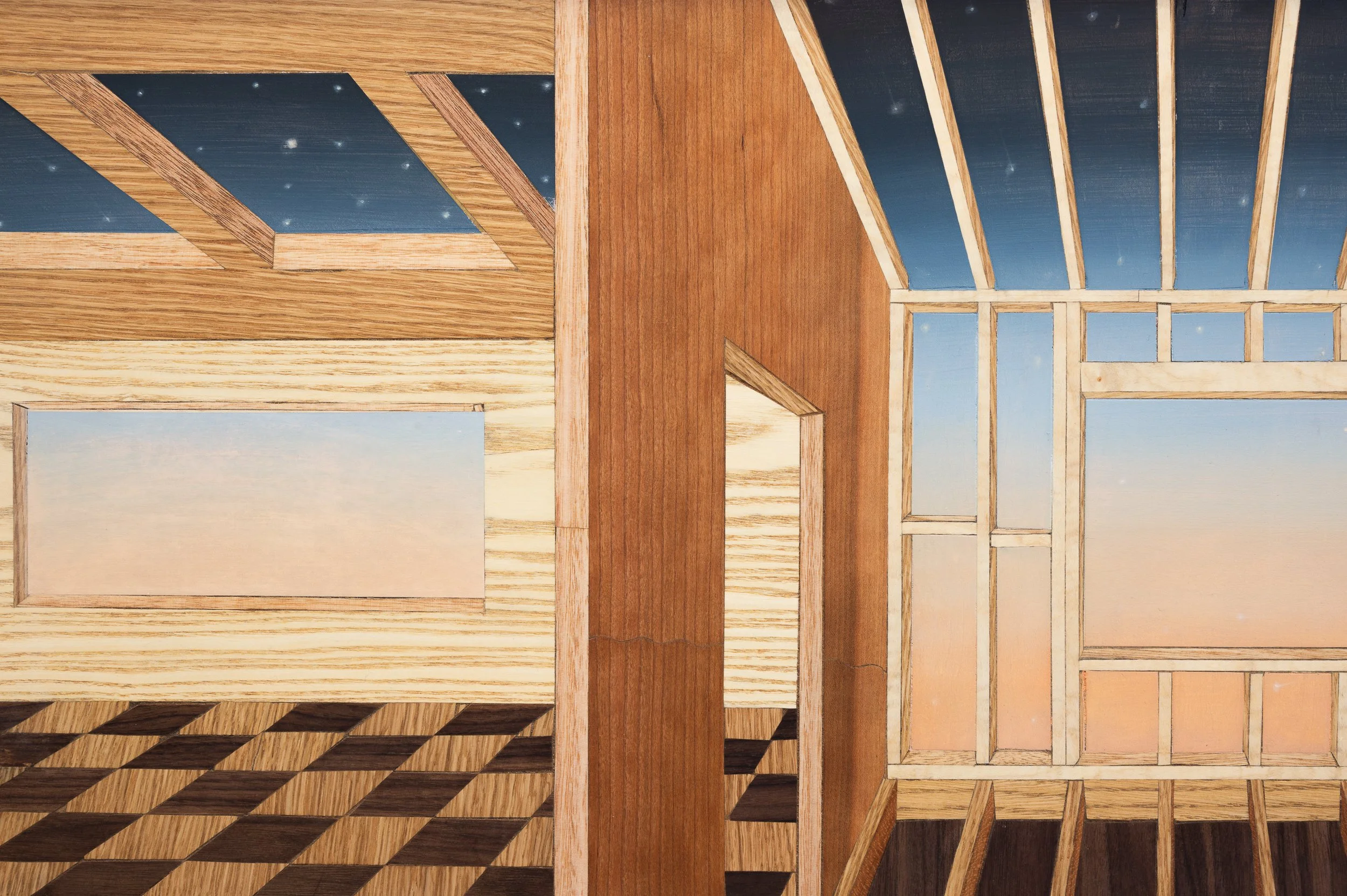
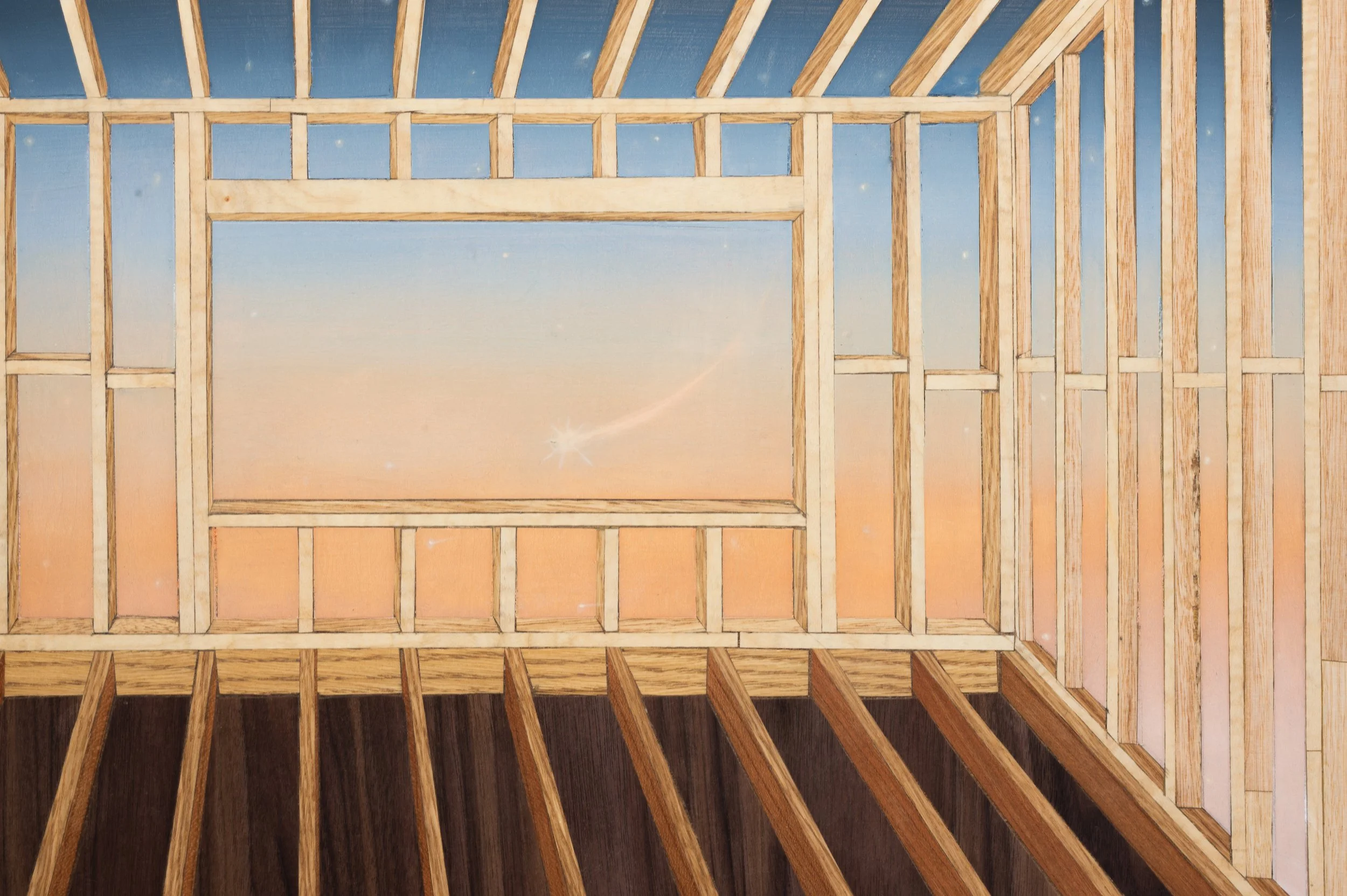
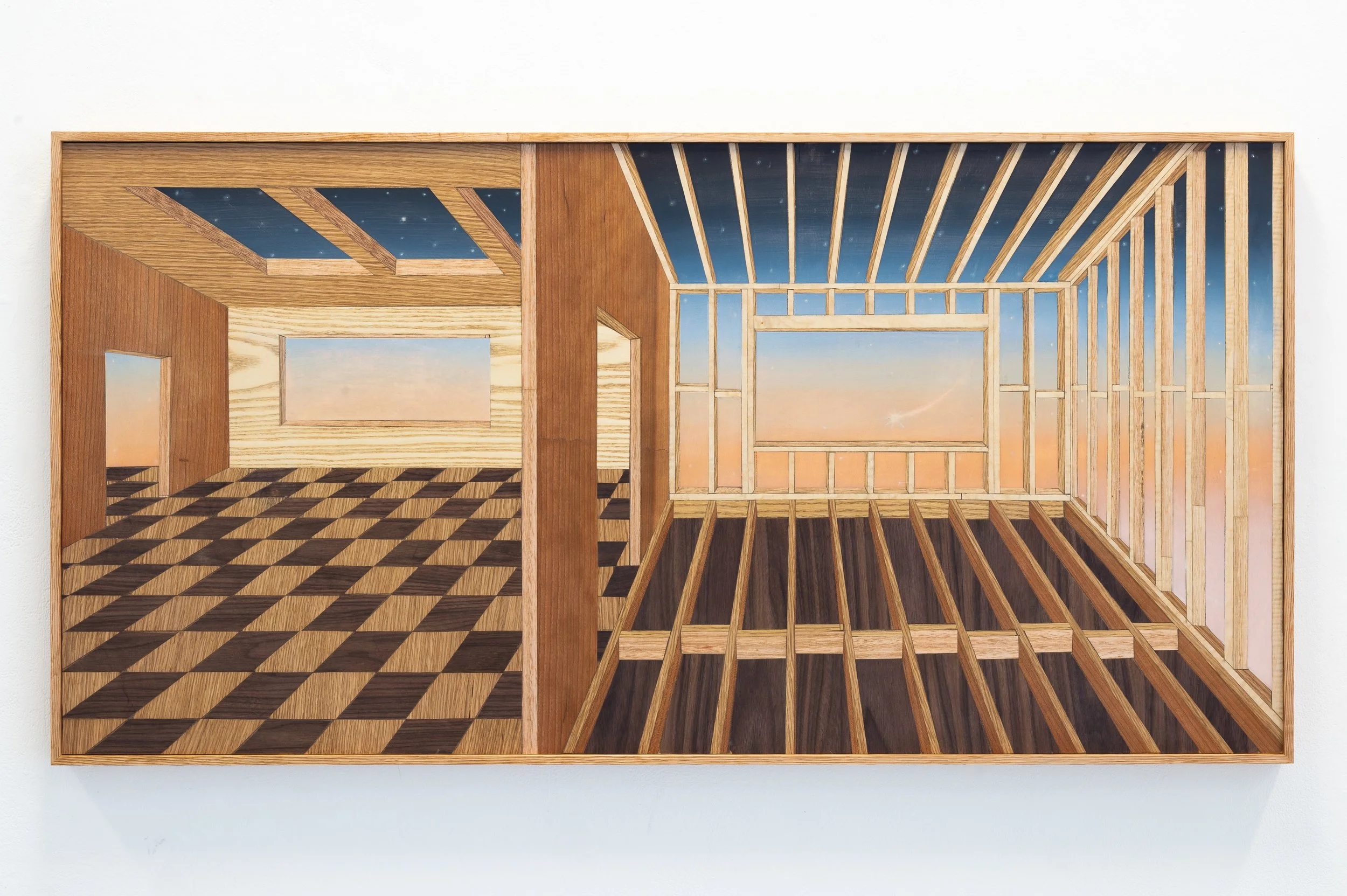
A Gateless Gate
An accompanying text by Hugh L. Magnus for Canopy at Sutton Projects.
Regret emerges smiling from the sea,
the sick sun slumbers underneath an arch
Charles Baudelaire, Recueillement
Before a picture represents anything, it tells us something about consciousness. Ductus
(movement, flow) is a classical term originally used to describe rhetorical structure: applied to
literary, artistic and architectural compositions, it indicates the path of the mind moving through a
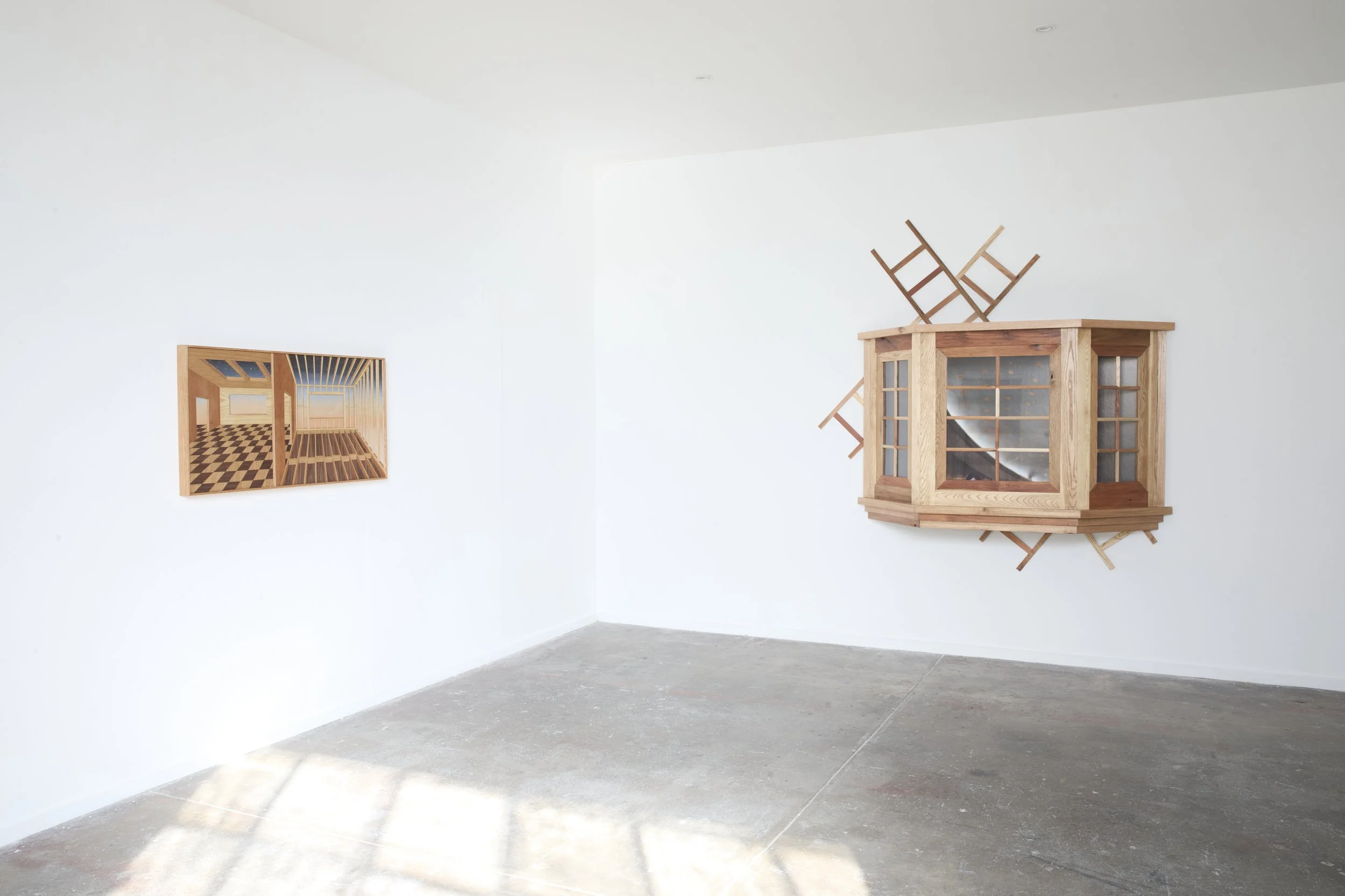
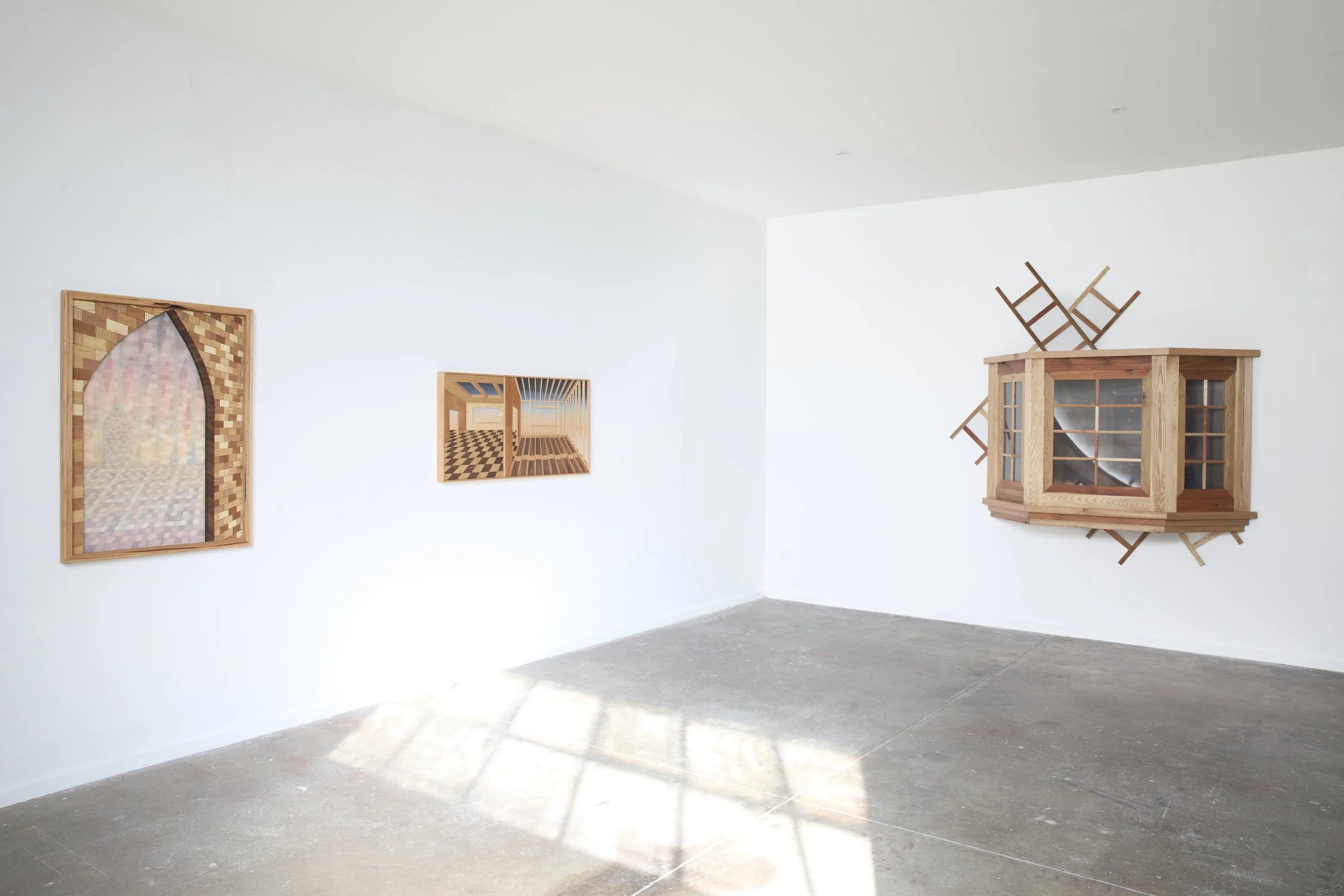
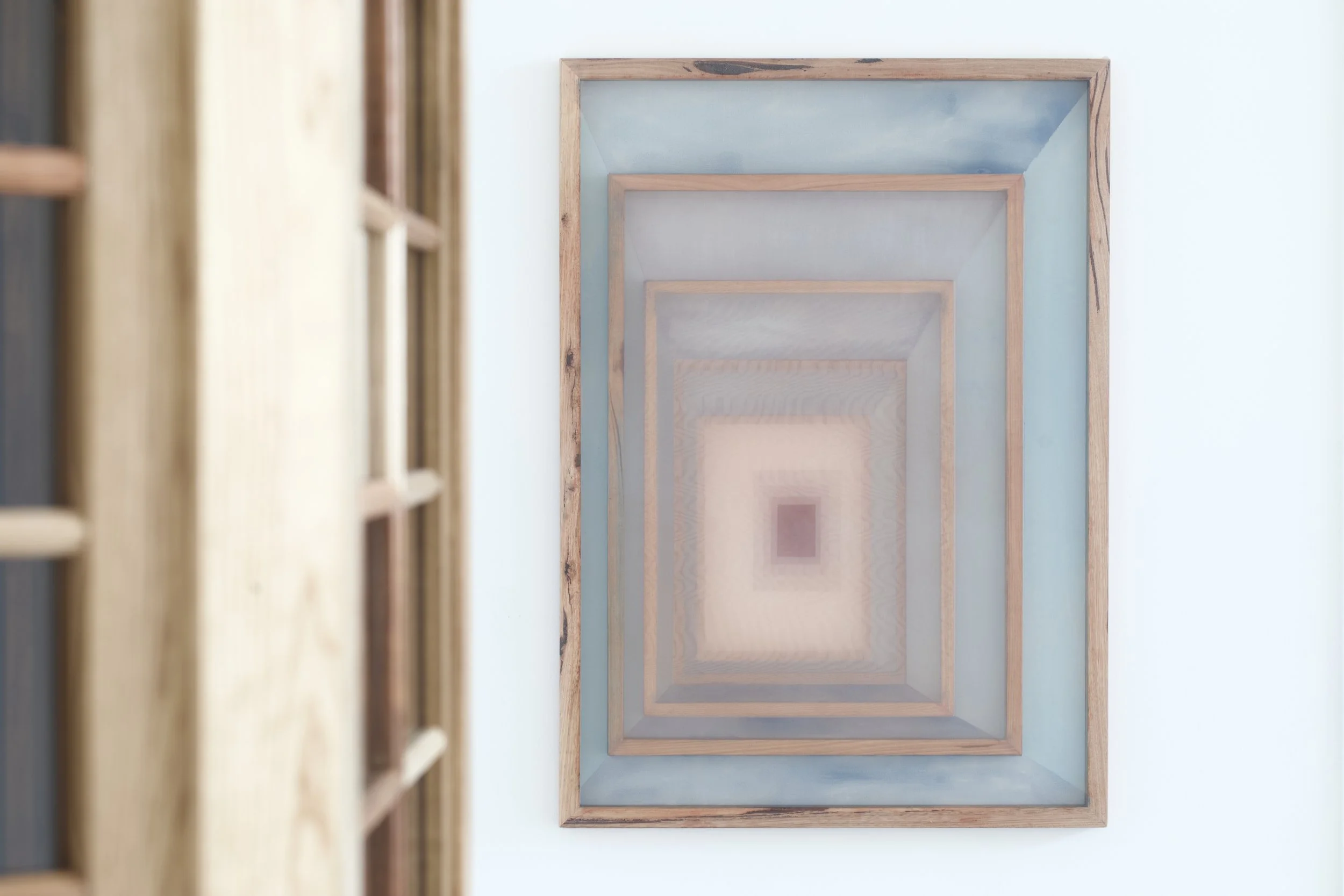
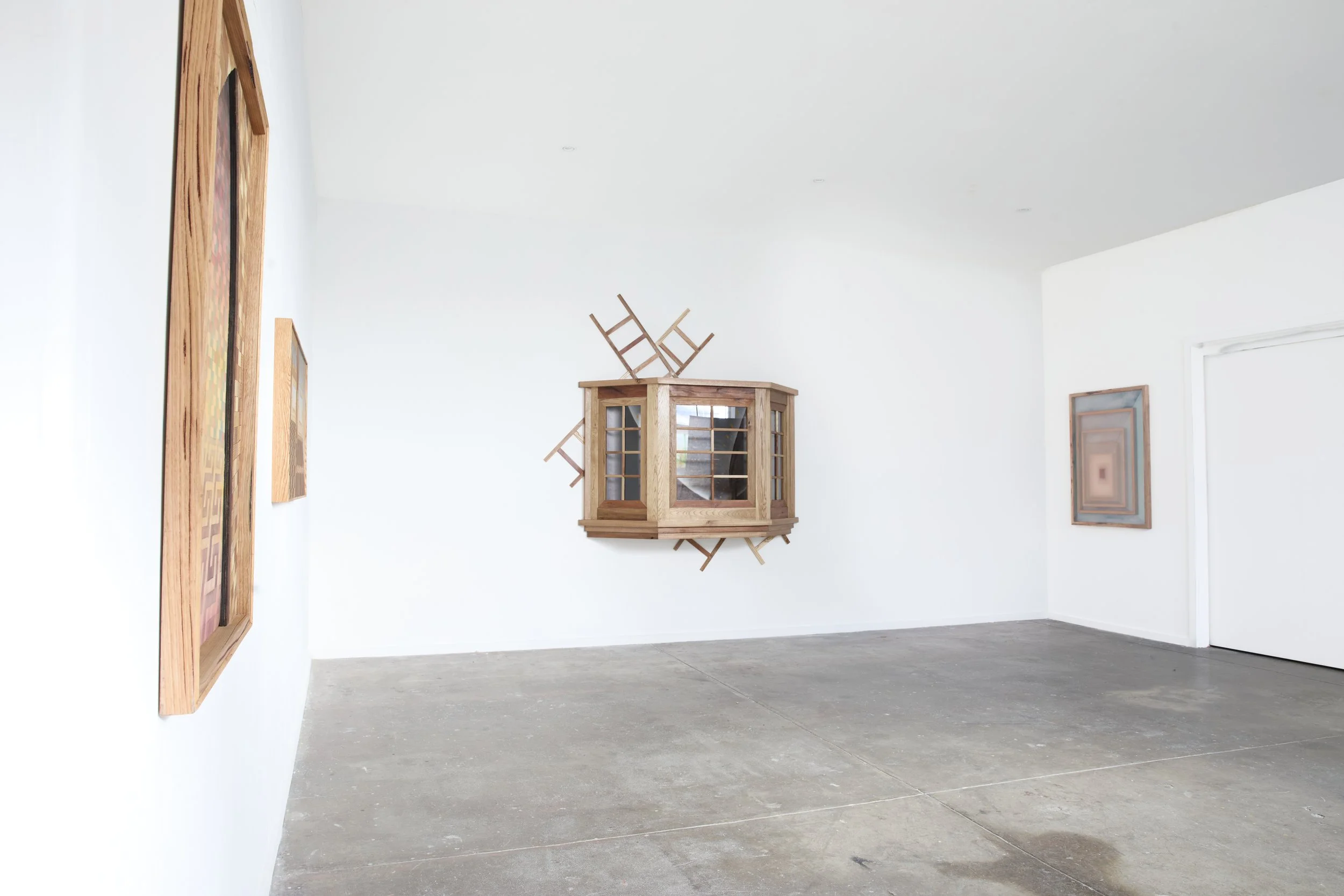
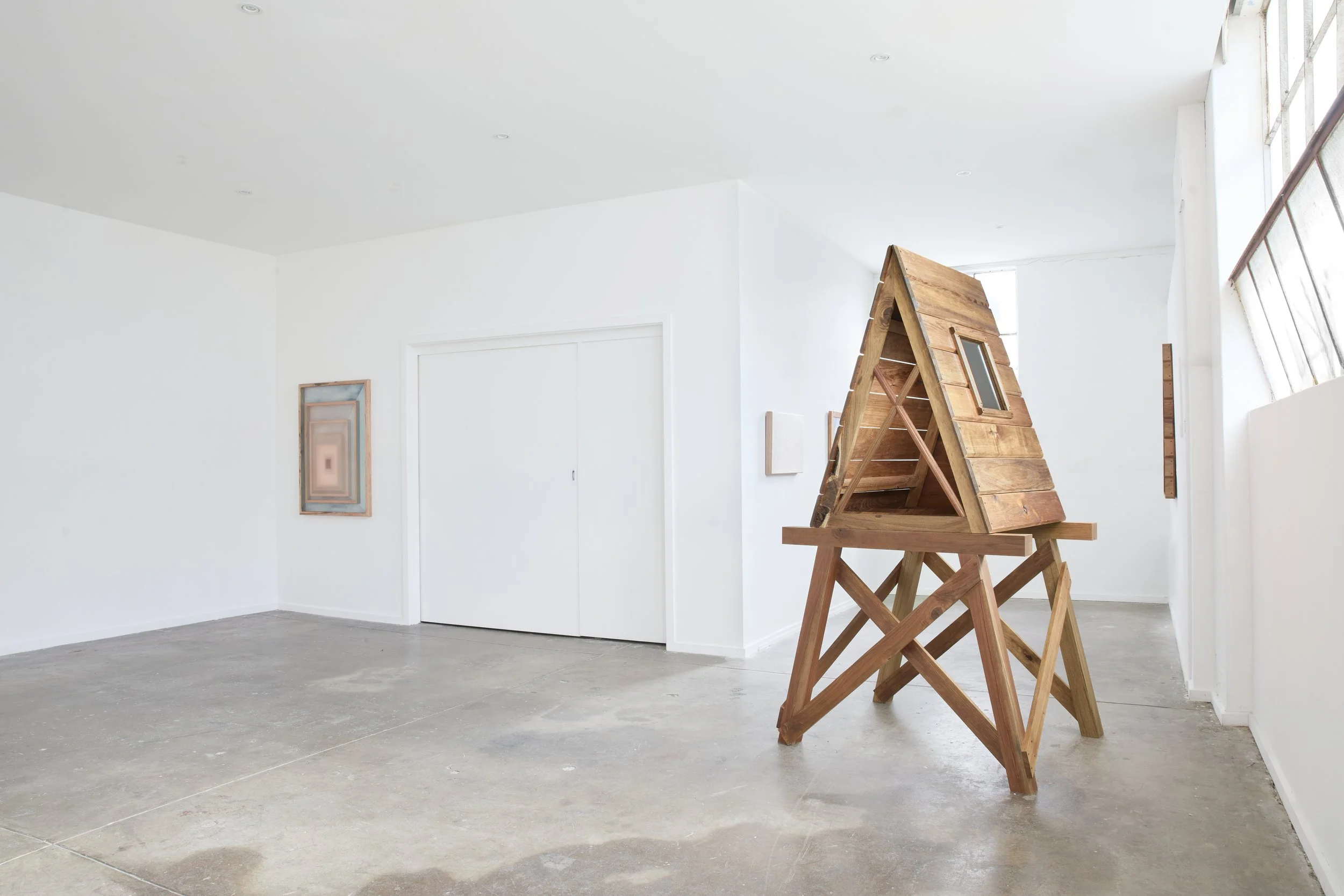
work. The distinctive architectures of Felix Oliver and Naoise Halloran-Mackay in Canopy invite
such a reading, one in which constructed space transfigures and transcends the powers of eye and
mind.
Architecture and figure have long been inseparable in art, from the sculpted caryatids of Classical
(and Neo-classical) times to buildings’ deployment as framing devices in Gothic and Renaissance
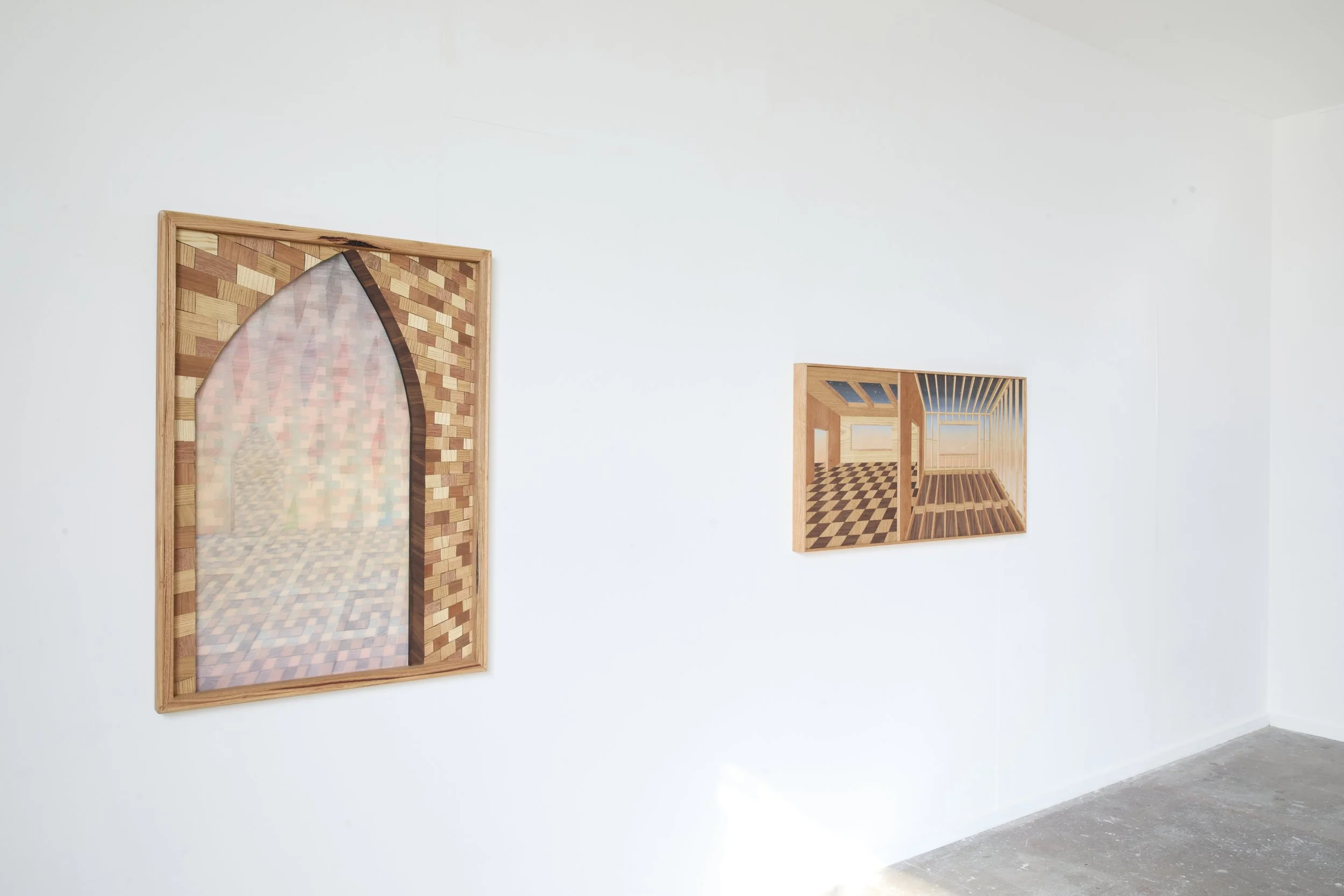
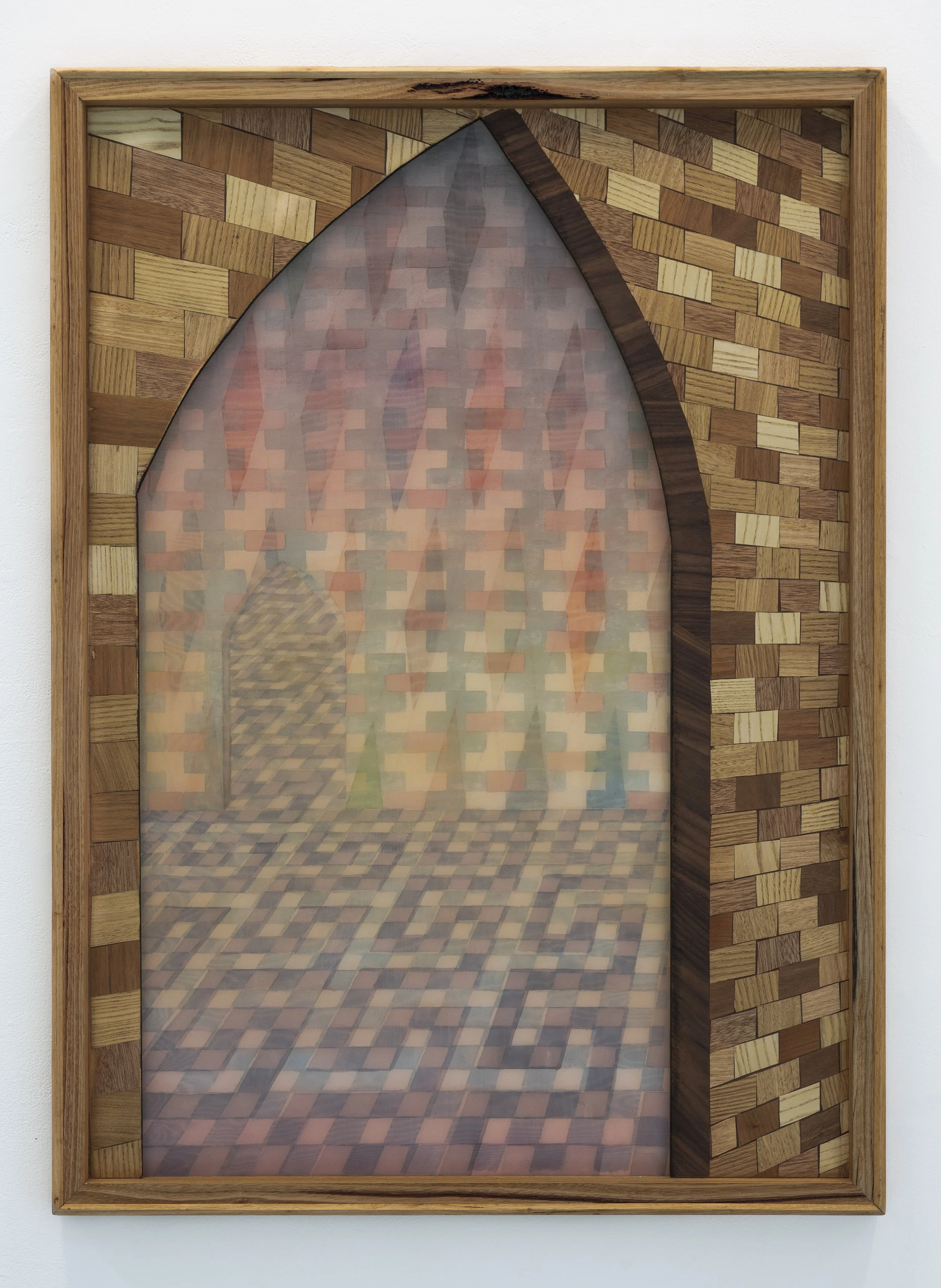
painting. For de Chirico, the presence of whose empty arcades can be felt in Halloran-Mackay’s
intricate structures, “the open doors, arches and windows that accompany [Giotto’s] figures allow
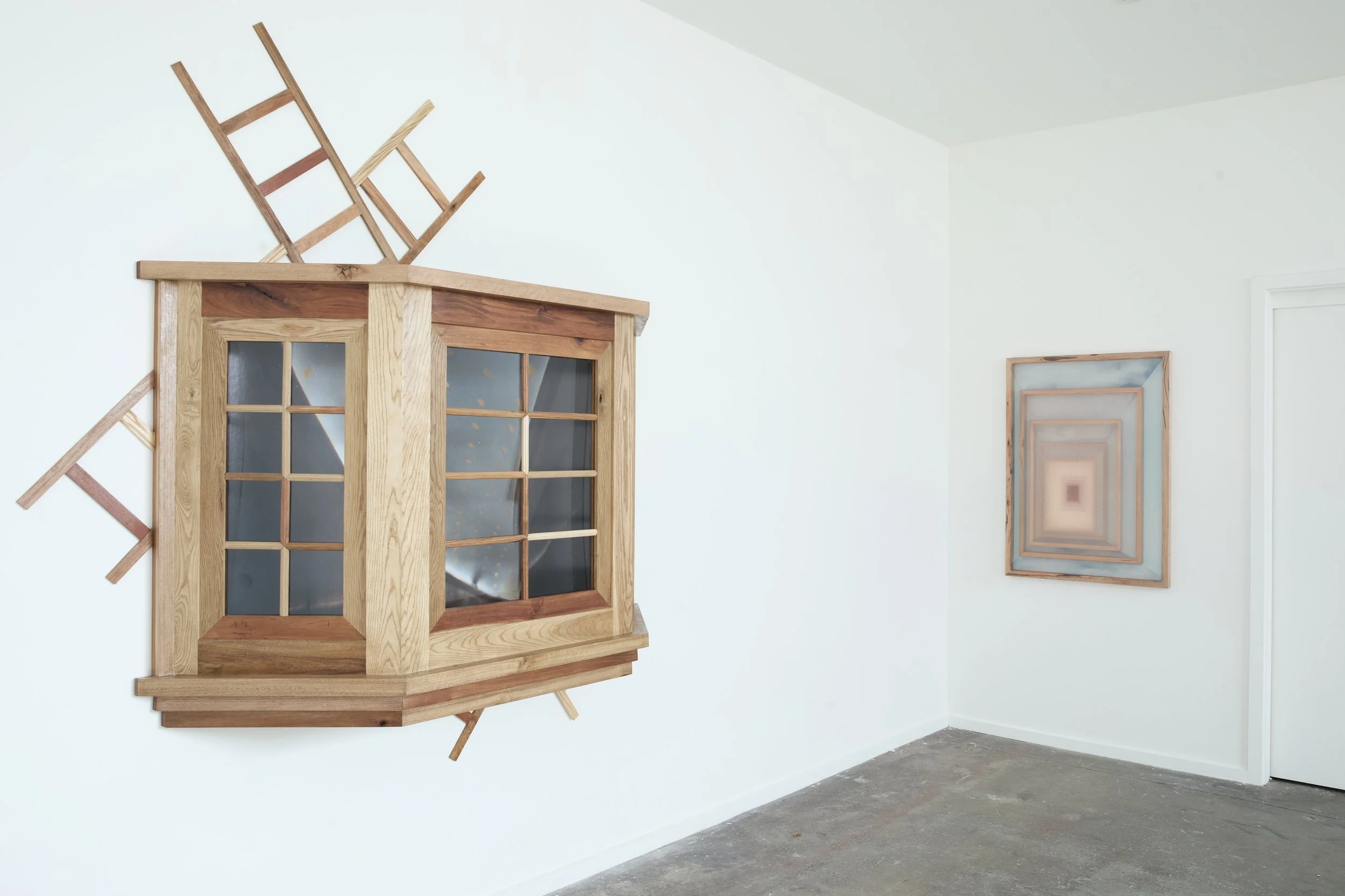
one to feel a presentiment of cosmic mystery.” The blankness of the empty frame—here, that of
the house and the window—is supplanted by an oneiric reminder of that old aperçu; “the arch
never sleeps.” There is always something present in this negative space; the invisible relations of
force that bear structure, yes, but so too an engendering of the image’s self-awareness.
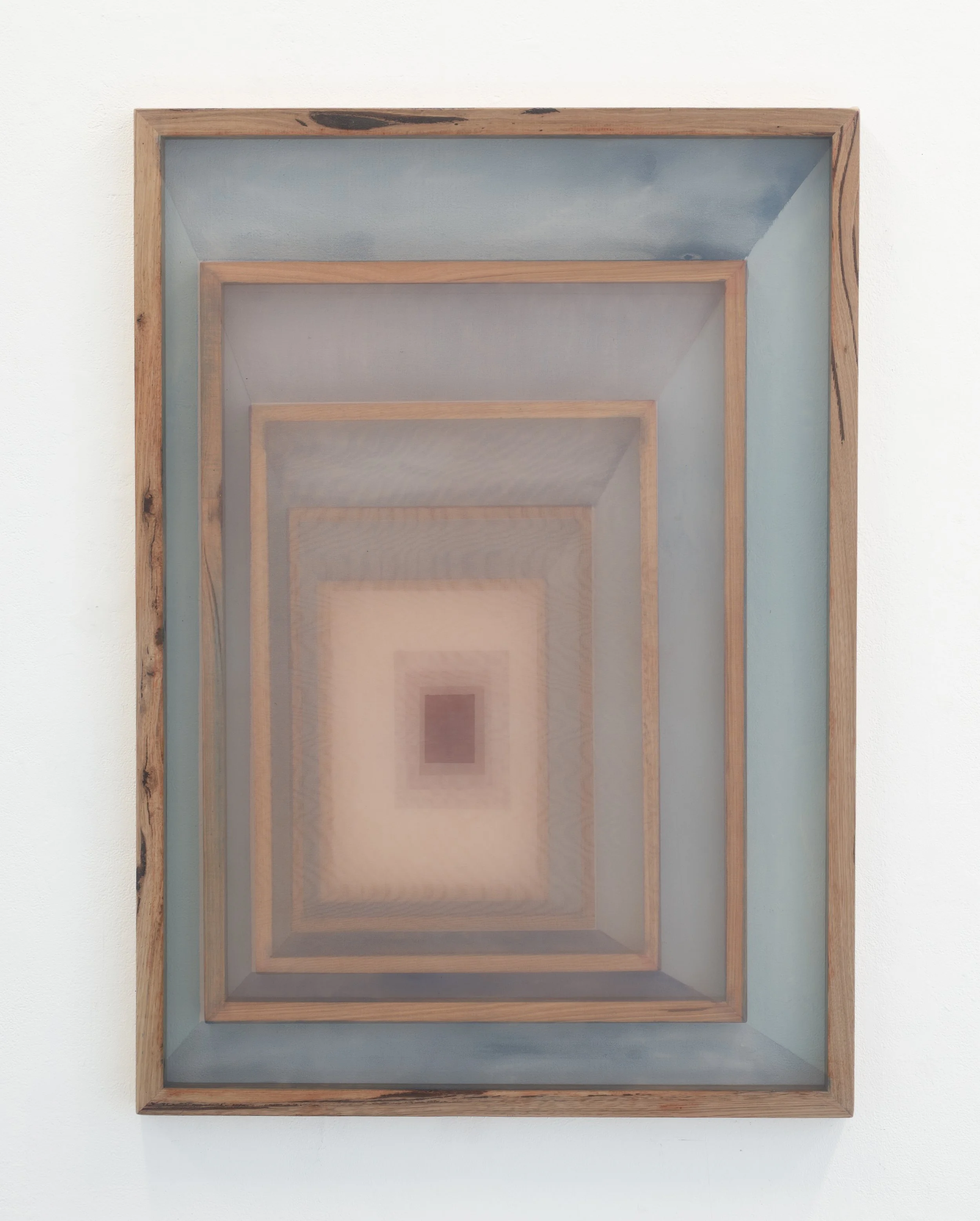
The gestural, illocutionary qualities of architecture demand an impression or gesture in return; in
these works it is the act of penetrating layered space. While we have those who followed Giotto
to thank for linear perspective, the works in this show share more of a sensibility with the
additive space pioneered by artists of the Dutch Golden Age—Vermeer and van Hoogstraten
among others—whose meticulous interiors are that, in the words of their forebear Karel van
Mander, “into which the eyes may plough”. (Incidentally, this period also saw the development of
marquetry as a trade, the ébénistes of the Low Countries fuelling a mania for inlaid wood across
the palaces of Europe.) Constructing seeing in this self-aware manner acts as a sort of visual trap,
thematising a rhetorical, active looking. Trompe l’œil, the fabrication of illusory space, has no
small part to play in this entrapment. Indeed, Lacan recounts the foundational narrative of the
technique (the tale of two artists, Zeuxis and Pharrhasios, the former of whom is fooled by the
latter’s painted veil) as suggesting “a triumph of the gaze over the eye”.
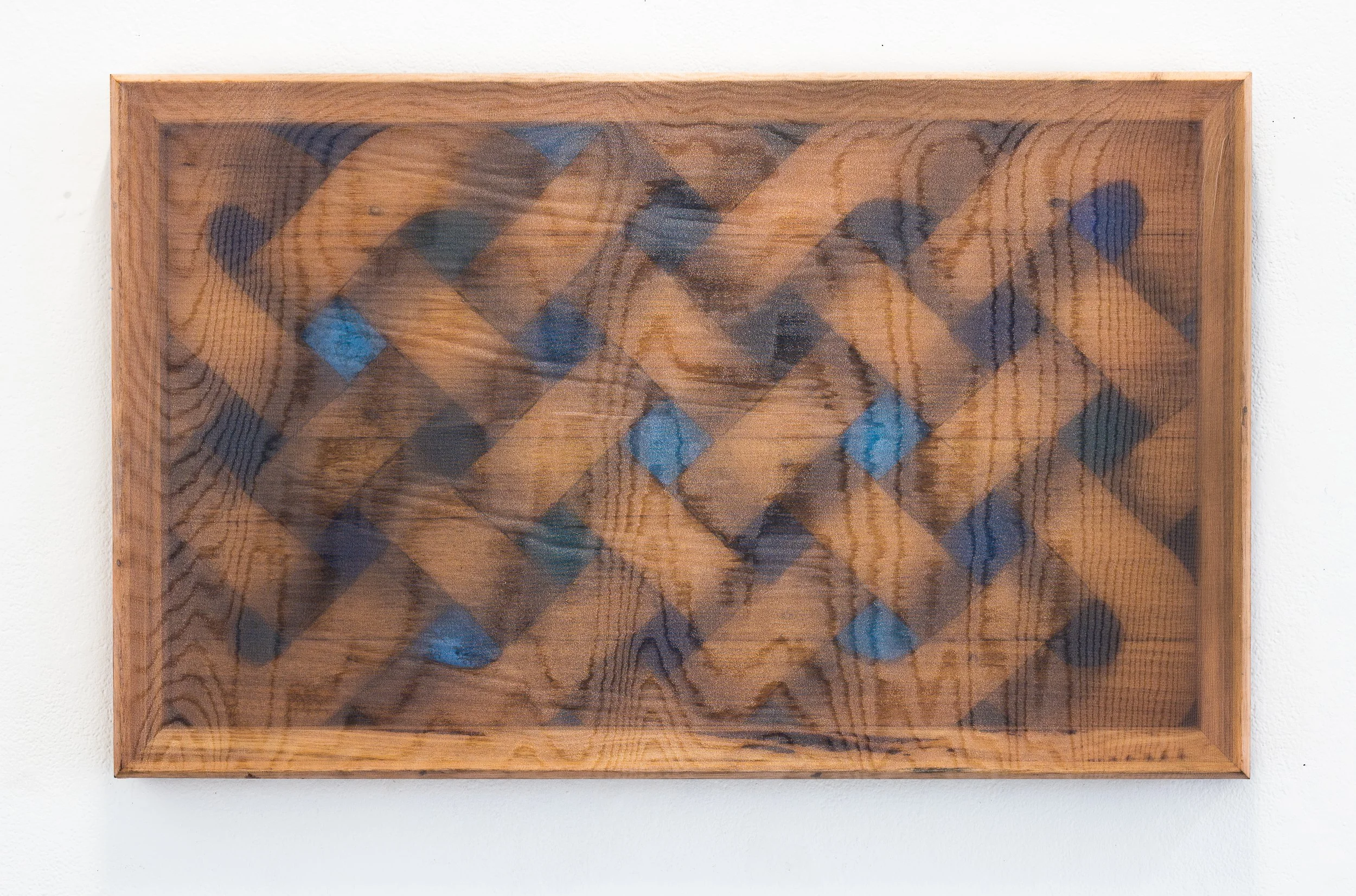
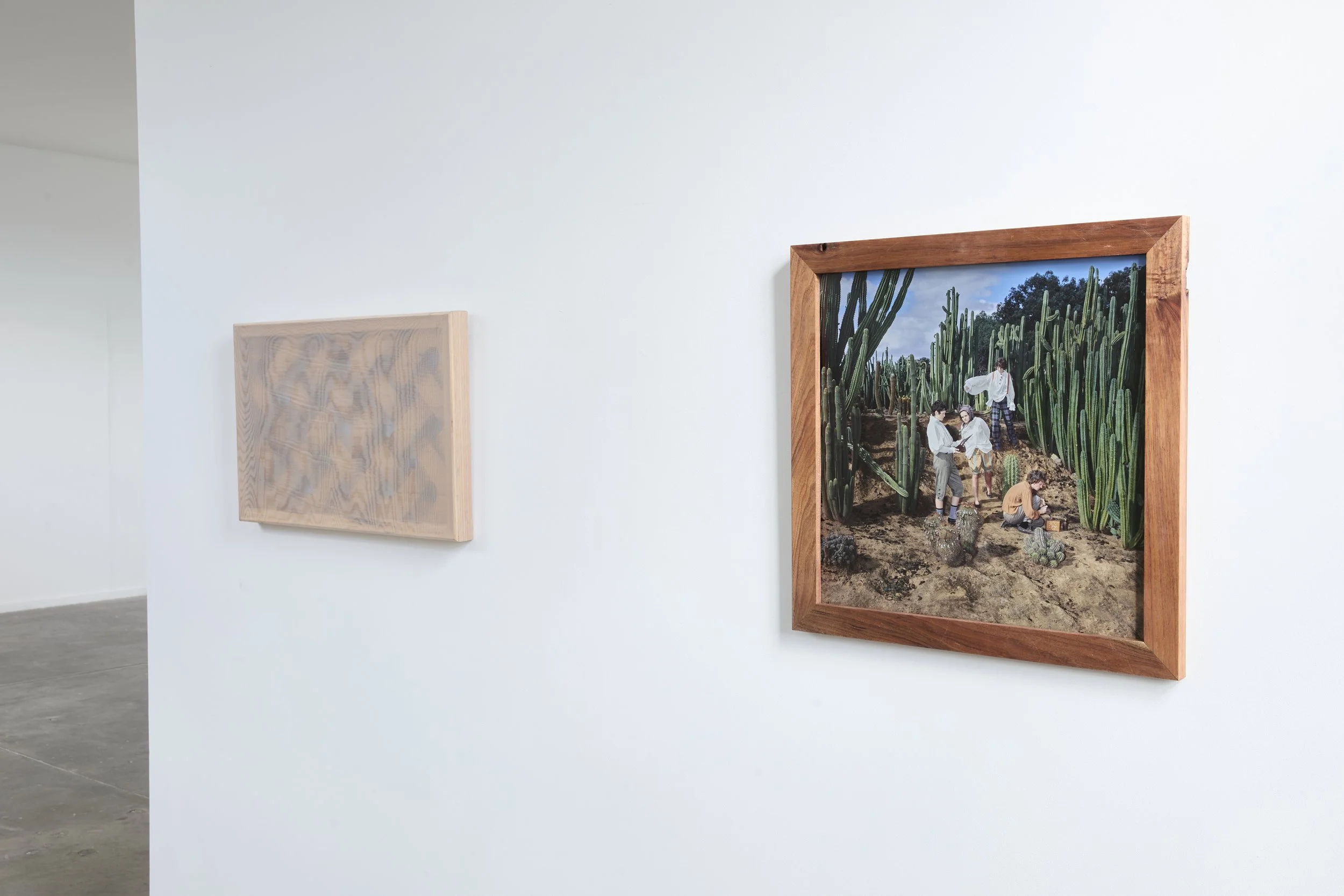
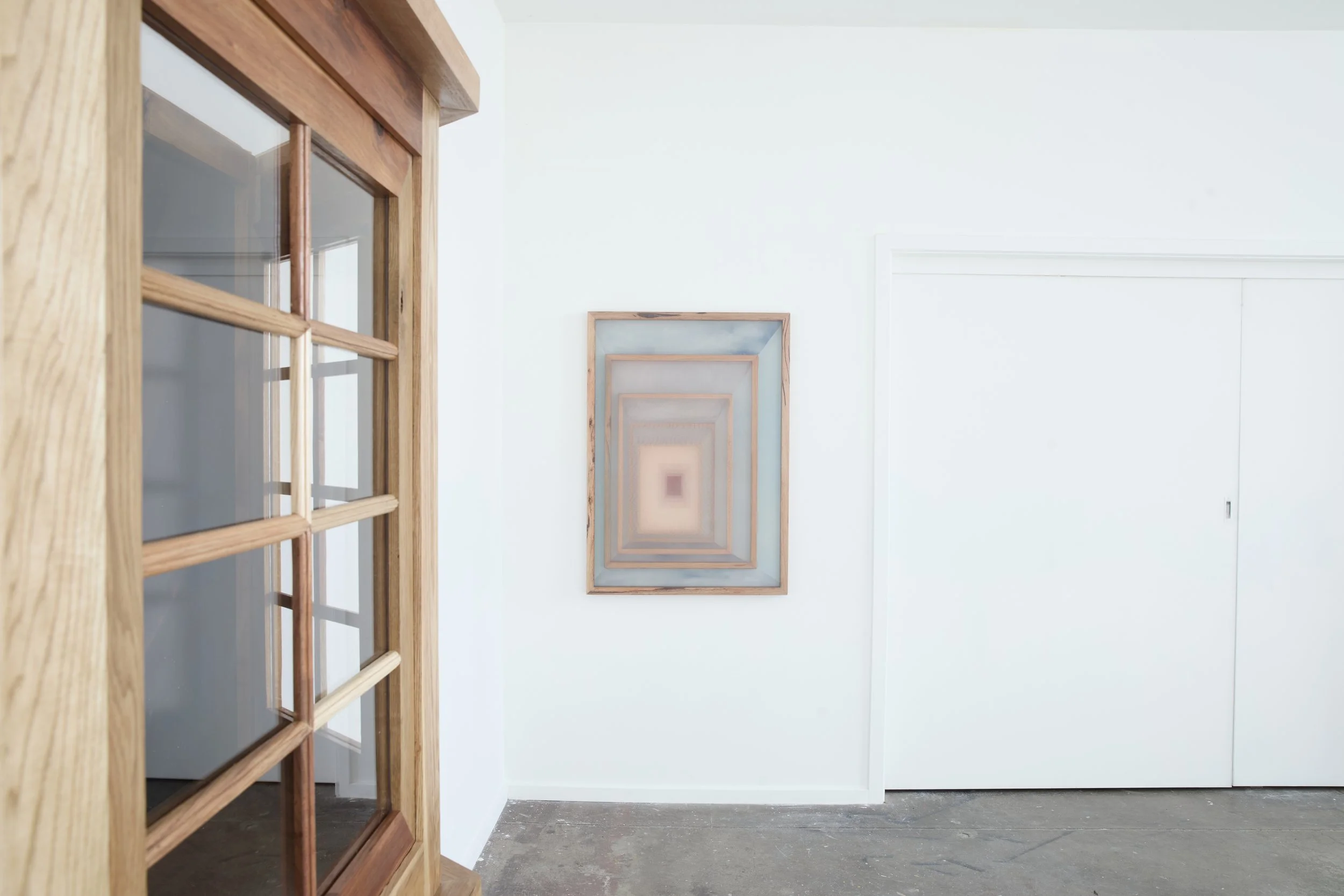
Yet in Canopy the veils are both painted and real. Organza shrouds or absent panes of glass
complicate a reading that invariably prioritises obscuration as the object-cause of desire. How
then can these works be navigated, the contradiction of spaces for moving through (with the eye
or the body) that are by nature impassable? Walter Benjamin tells us that the interior, “for the
private man, represents the universe.” Perhaps then containment, rather than movement, is the
wellspring of space. The journey of architectonic exploration in Oliver and Halloran-Mackay’s
work is testament to this, both artists undertaking a bringing-forth of space and image. The blank
arch, that gateless gate, shapes our entry into the dream.
Hugh L. Magnus, July 2026